"I paint, therefore I am"
Painting is life, and painting gives life.
The artist selected the material for this chamber exhibition from her rich collection of the past ten years, so most of the works are newer, which is a good sign. Most of them are oil paintings on canvas, of a very high professional quality. They embody all the professional foundations of the now legendary Gyémánt School, complemented by the painter's sovereignly fulfilled, well-developed oeuvre.
Read more
On the exhibition of painter Edina Ardey
Edina Ardey was born in Sárospatak, where she also completed her schooling. Alongside her early artistic development, she pursued musical studies. In 1991, the painter György Urbán—himself a native of Sárospatak—recognized her drawing talent and mentored her until 1993. From that year onward, she studied at the Óbuda School of Painting, where her master became László Gyémánt. She participated in the school’s art colonies and later graduated from the vocational school of photography on Práter Street in Budapest—an education that, in my view, played a significant role in shaping her later painterly vision.
From 1998 she lived in Munich, where she worked in portrait and ceramic painting and also taught. Her personal life was not without trials. In 2014 she participated in the Óbuda School of Painting’s collective retrospective exhibition. That same year, she joined her life with László Gyémánt. Over the past decade, they have presented several joint exhibitions—first in Zalaegerszeg in 2015, following Gyémánt’s earlier successful show there, and later in Újpest, where he holds honorary citizenship. A peak moment was their joint exhibition titled Our Story, held in May 2024 at the Art Salon Társalgó Gallery, which attracted remarkable professional and public interest.
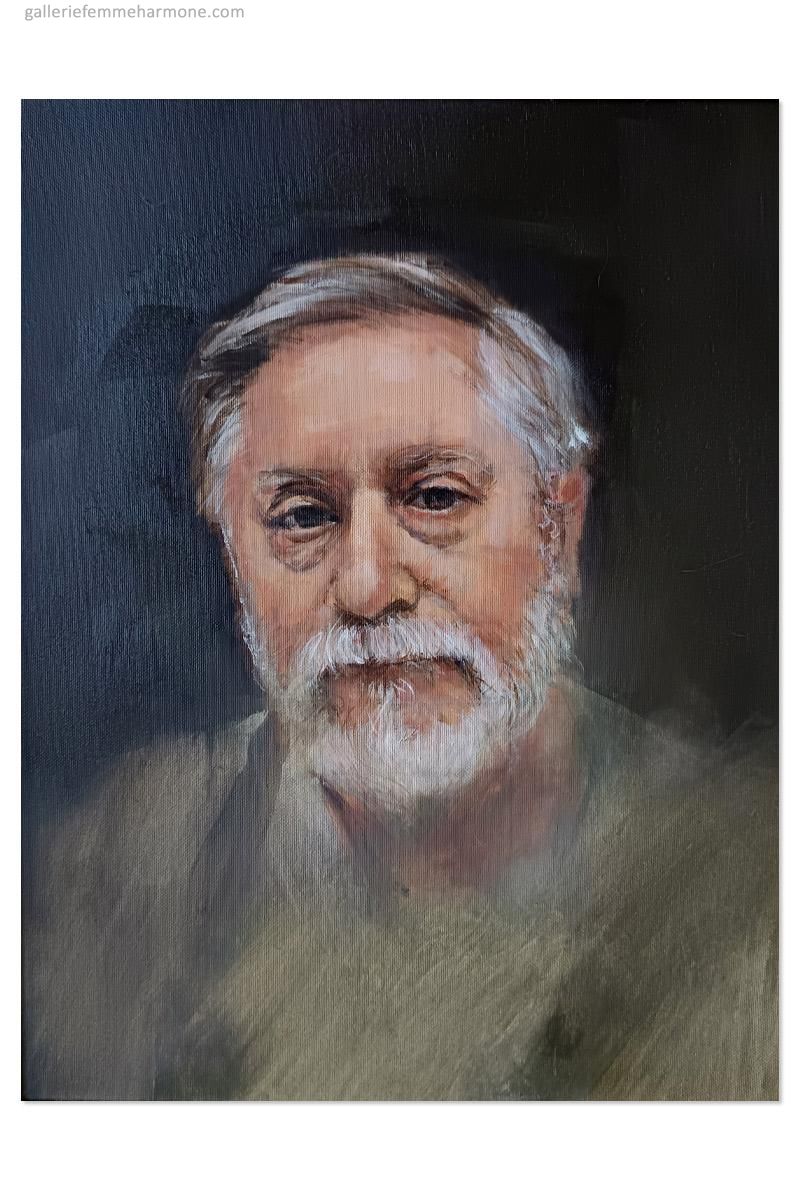
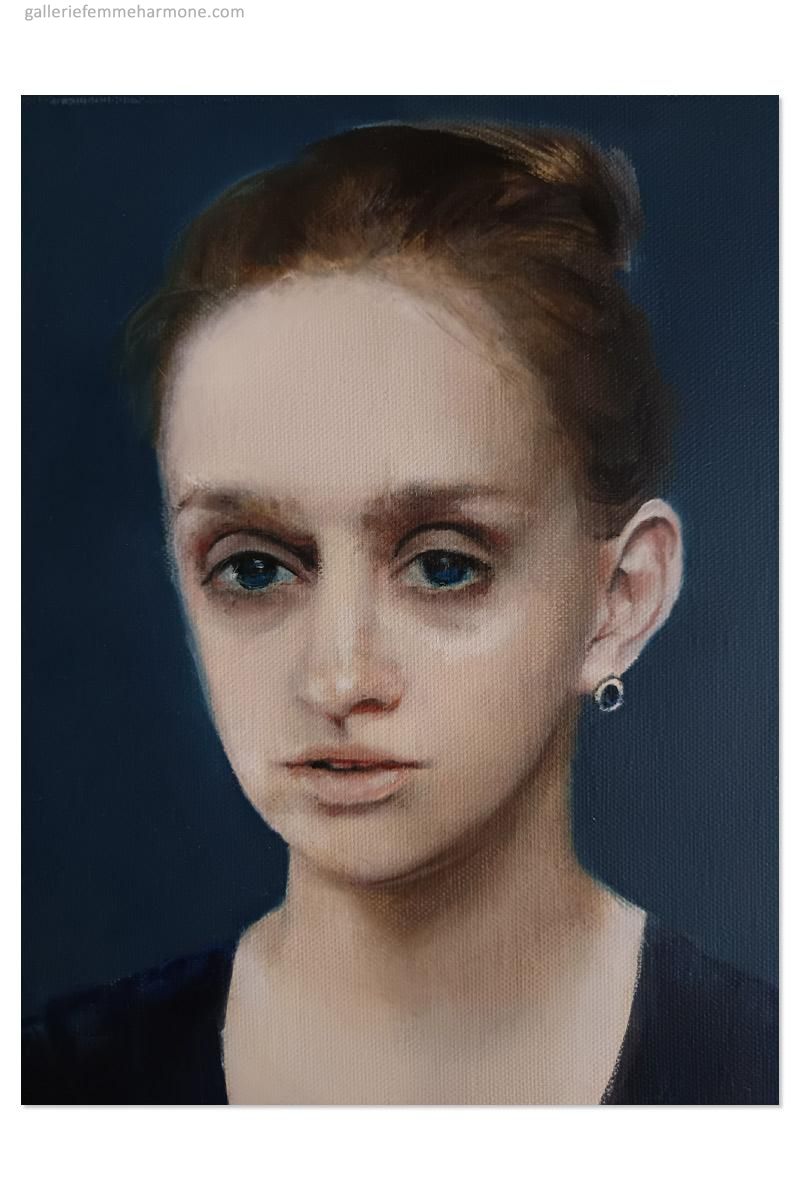
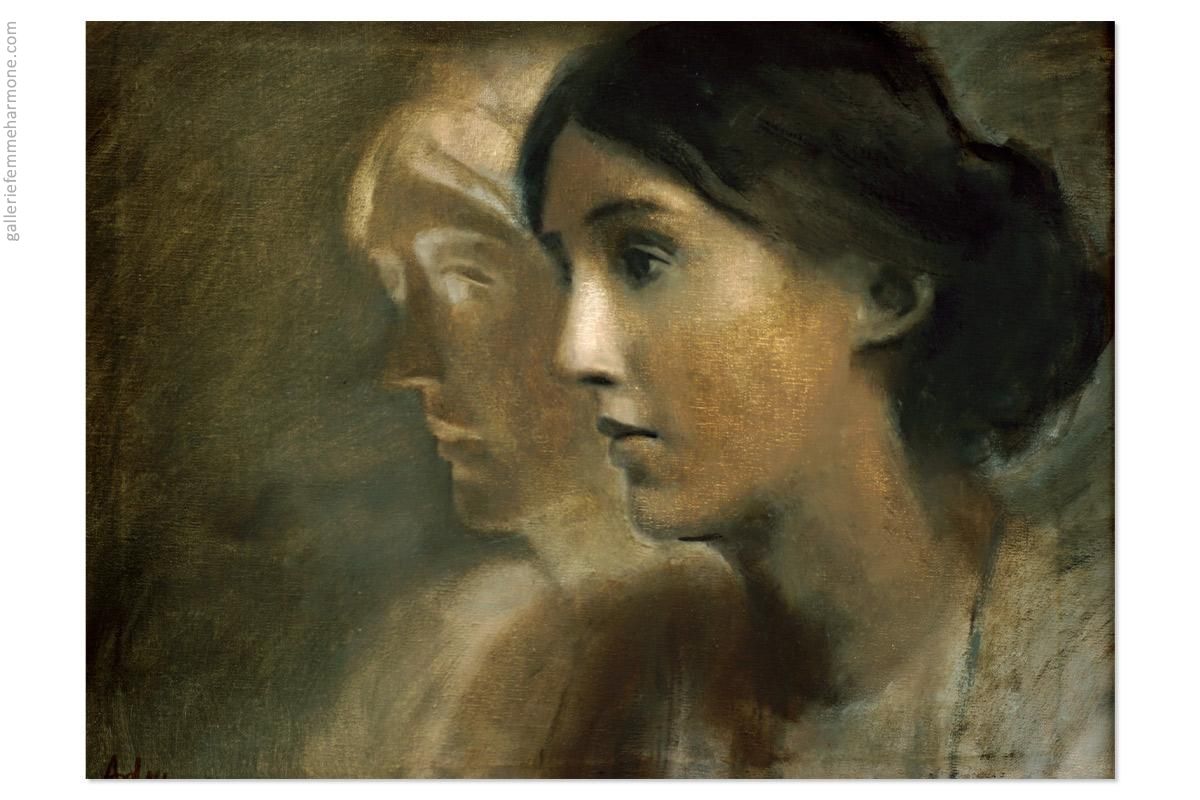
Their shared exhibitions are worth mentioning because their works visibly complement one another. Edina’s style is characterized by figurative painting imbued with subdued, often somber tonalities. Portraits and self-portraits dominate her oeuvre. These works convey inner conflict, tension, contemplation, and meditative depth—melancholic yet consistently poetic. Her figures are not depicted in action; rather, they appear as thinking, introspective presences. A particular spirituality radiates from both the subjects and the paintings themselves. Her visual world is intellectually layered and complex.
Although Ardey may appear reserved, she is concerned not only with painting as self-expression but also with time itself. The distant past surfaces in her work—for example, in her portrayal of the young László Gyémánt. Tempus veritatis filia—time is the daughter of truth. In simpler terms: with time, everything becomes clear. Over the past decade, it has become evident—indeed certain—that a true painter has emerged. Not carried by fashion, nor aided by favorable winds, but grounded in rigorous academic training and sustained by a self-reflective attitude.
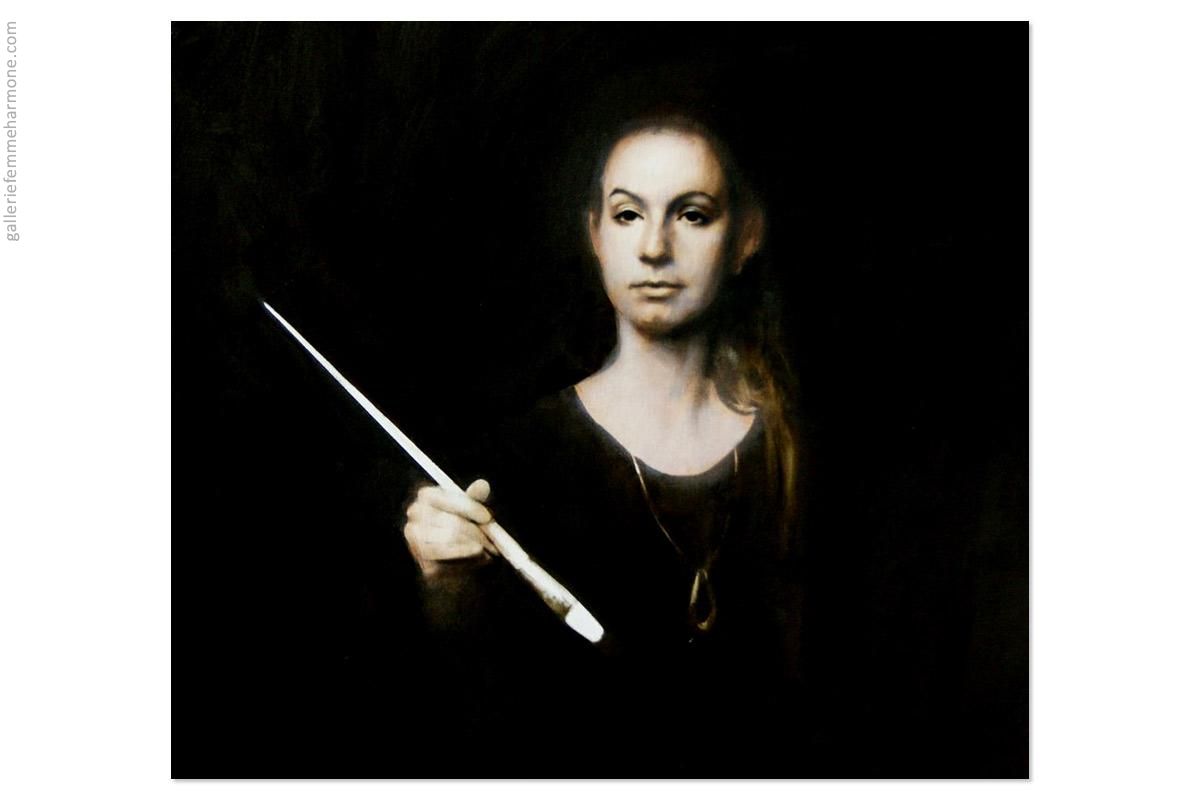
Her self-portraits speak of doubt and hope, withdrawal and openness. Hers is a traditional painterly approach, consciously rooted in European heritage. A notable artistic challenge is her self-portrait painted as a paraphrase of Vermeer. In one self-portrait she holds several brushes in her hand; the painting is titled Which One Should I Choose? My answer to this painterly—and poetic—question has always been: whichever brush you choose, just keep painting.
Edina’s situation is unique: she paints in the same studio as László Gyémánt. This presents both challenge and privilege. Few painters can say they work in the same space as an extraordinary artist—indeed, a Kossuth Prize laureate. They also traveled together to the United States. While travel in itself holds no inherent artistic merit, it is significant that Edina’s American impressions resulted in lighter-toned paintings, reflecting her refined sensitivity and attentiveness to the world. Her autonomous artistic voice has by now become a distinctive presence within contemporary Hungarian painting.
She works tirelessly, and commissions form a substantial part of her oeuvre—many connected to Semmelweis University. In Professor Zoltán Nagy’s volume Outstanding Figures of Hungarian Ophthalmology and the Leading Professors of Ophthalmology Clinics, forty-two portrait drawings by Ardey are included. She has also painted portraits of distinguished physicians, including György Fekete and Professor Miklós Kellermayer. These works are displayed among the university’s portrait gallery of rectors and eminent figures—alongside paintings by Gyémánt.
Given the modest size of the gallery hosting this exhibition, allow me to offer a brief virtual tour.
The exhibition opens with an important self-portrait titled Facing. She presents herself as conscious and determined, without glasses—following her well-known eye surgery. In her hand she holds a prominently large brush, placed perspectivally close to the viewer, suggesting that the act of painting itself may be more significant than the depiction of the face.
Beside it hang two male portraits: Dani, a longtime friend, and cardiologist István Préda, who recently passed away and played an important role in maintaining Gyémánt’s heart health. Set against dark backgrounds, Dani appears dynamic and almost gestural, while Professor Préda bears a slight, hopeful smile. The handling of light—always a crucial artistic decision—shapes each face distinctly.
A larger composition evokes Edina’s New York impressions: three young women seated casually before a dark background. They belong together—and yet do not—each gazing in a different direction. A scene of life; a portrait of an era.
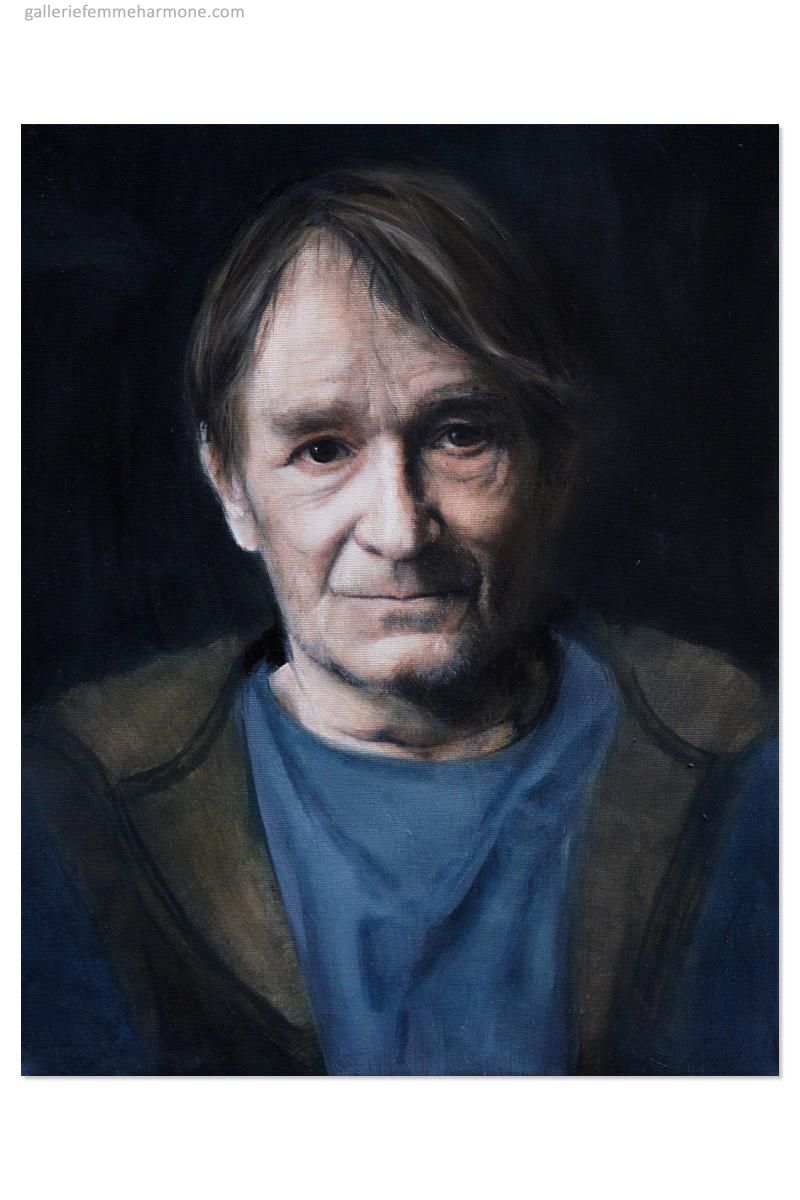
Two remarkable actor portraits follow: Eliza Sodró and György Cserhalmi. Sodró is rendered almost entirely in black, white, and gray tones, from which her deep blue eyes emerge vividly. Cserhalmi’s portrait captures a fleeting, slightly bitter smile—an instant transformed into a psychological study.
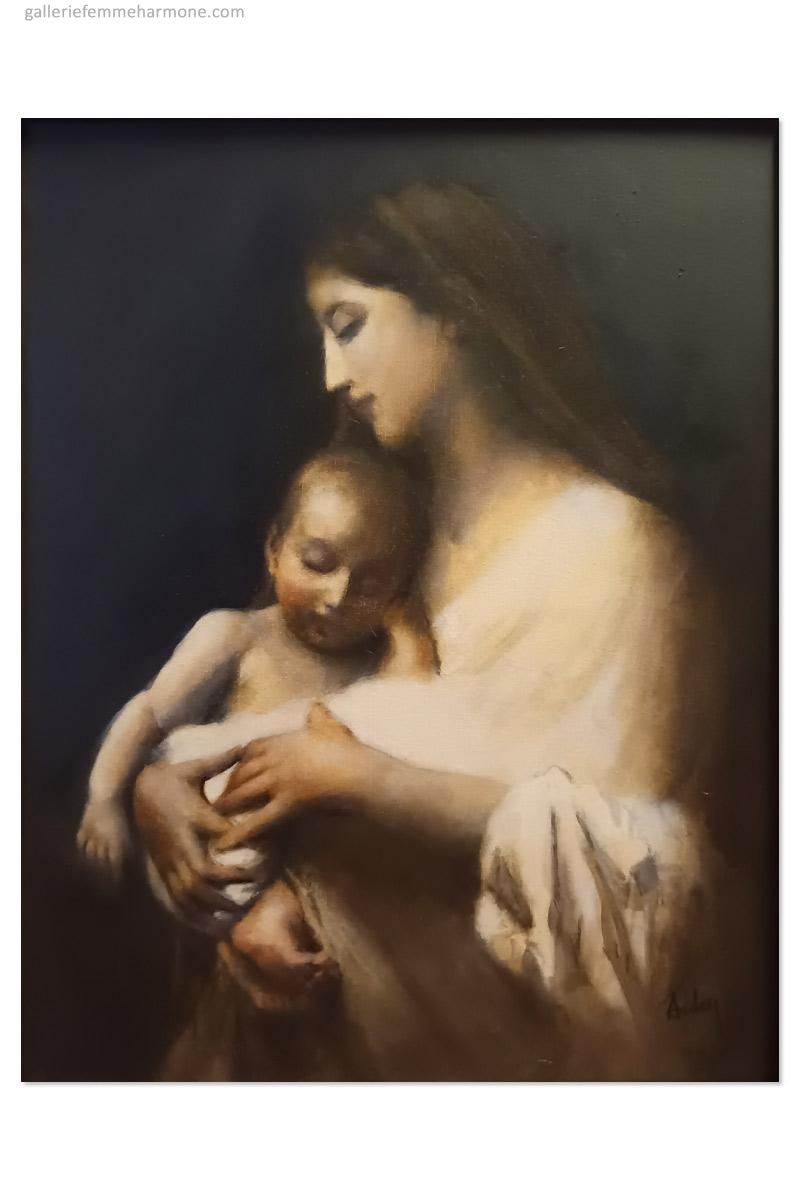
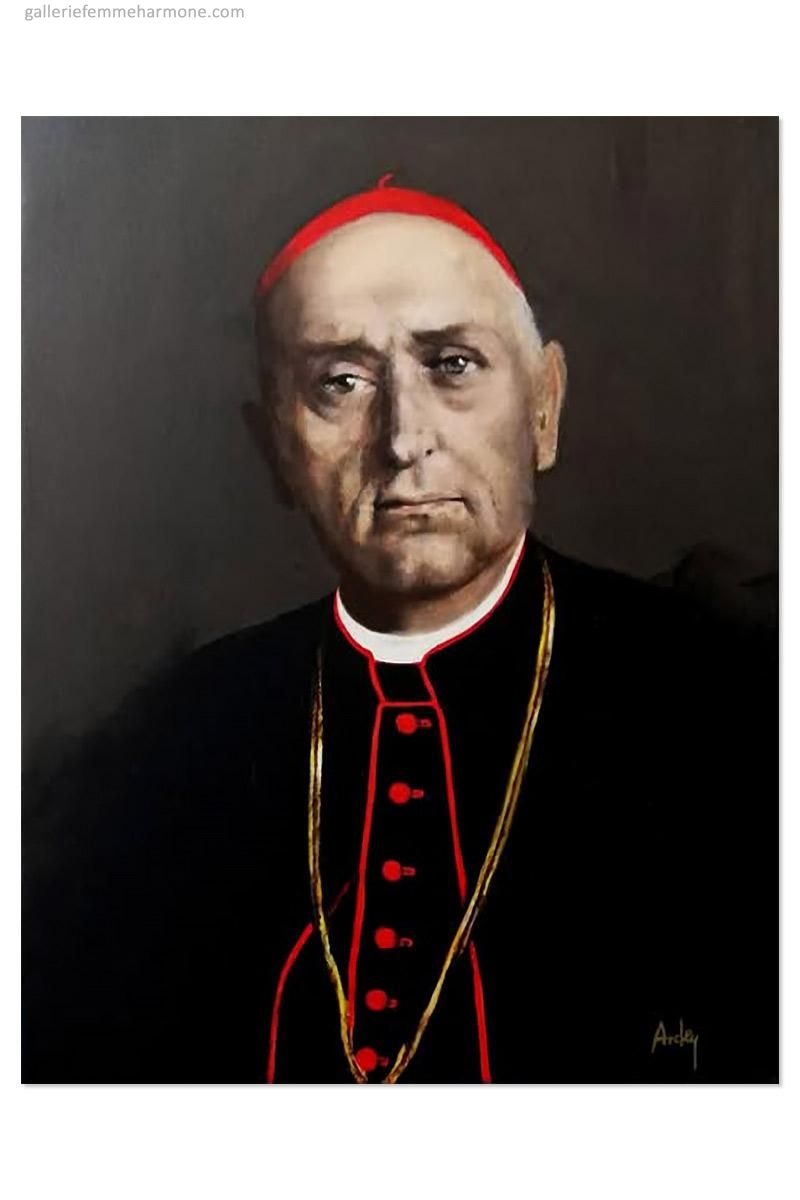
Opposite, the wall may be called the wall of history. The portrait of Virginia Woolf is lyrical yet suffused with the tension of her tragic life. In contrast, the portrait of József Mindszenty radiates faith and determination. Nearby hangs her Vermeer-inspired self-portrait—rich in associative meaning—alongside an atmospheric Mary with Child, boldly titled The Redeemer. Her baroque sensibility would not be out of place in a sacred environment.
Framing these works is one of her iconic paintings, The Sounds of Silence, whose quiet suggestiveness continues to captivate. The depiction of the trio reveals both technical mastery and conceptual depth.
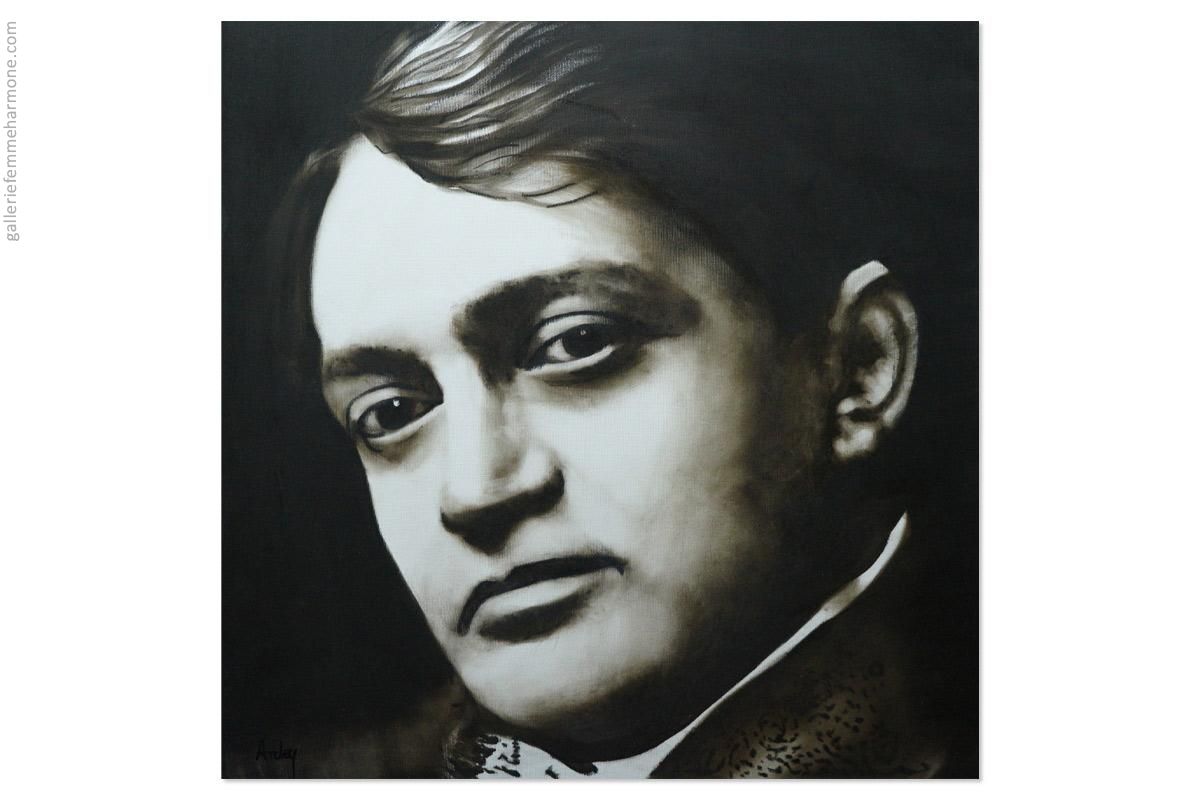
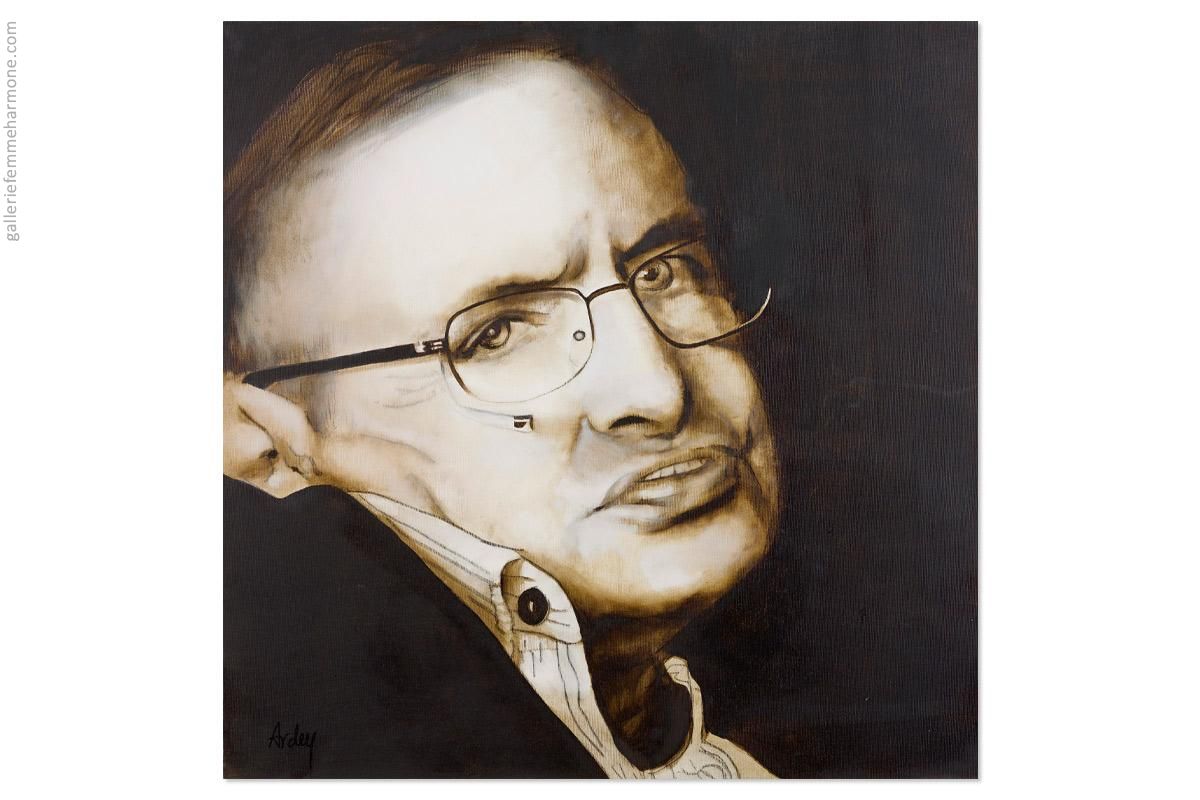
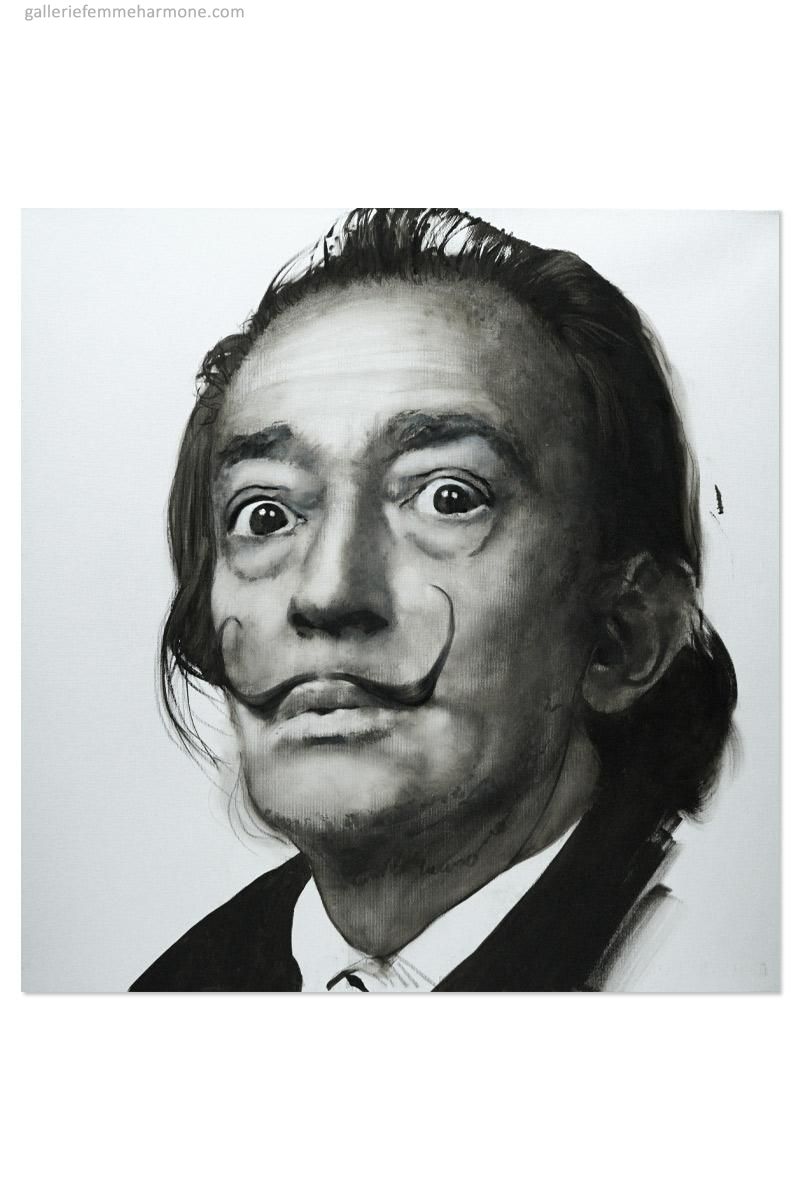
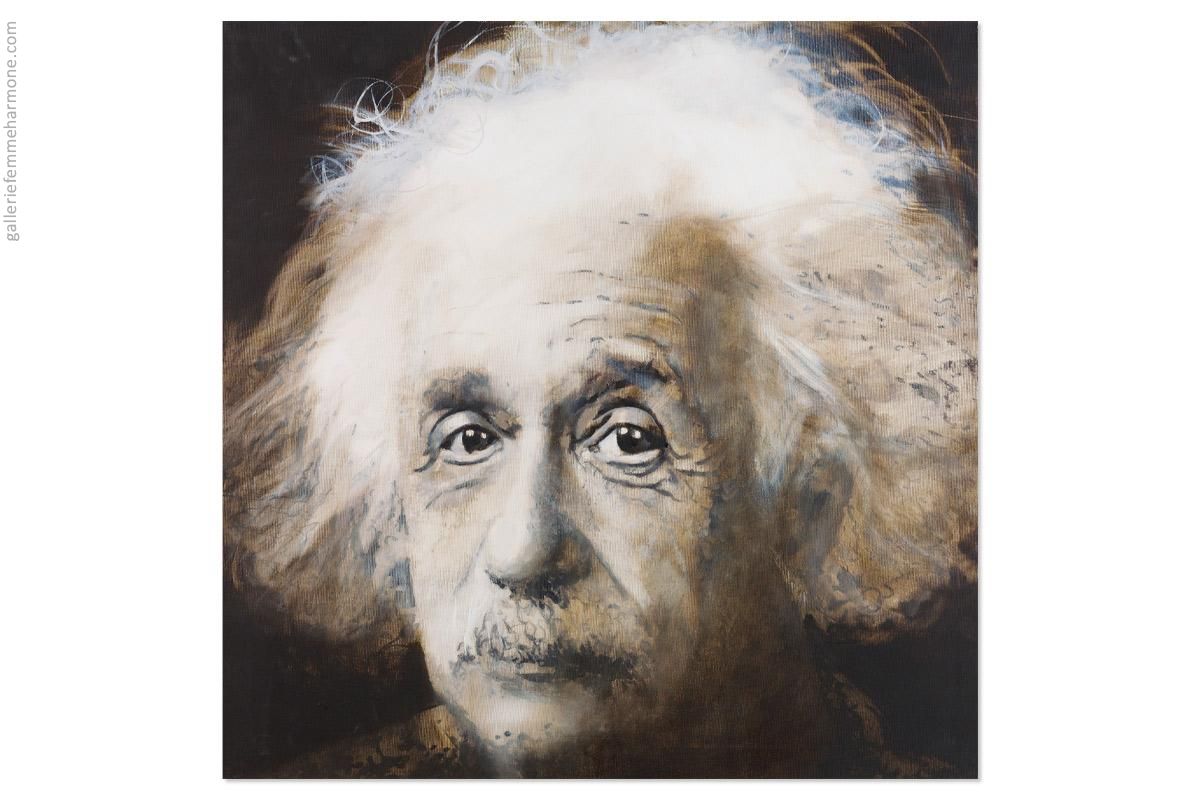
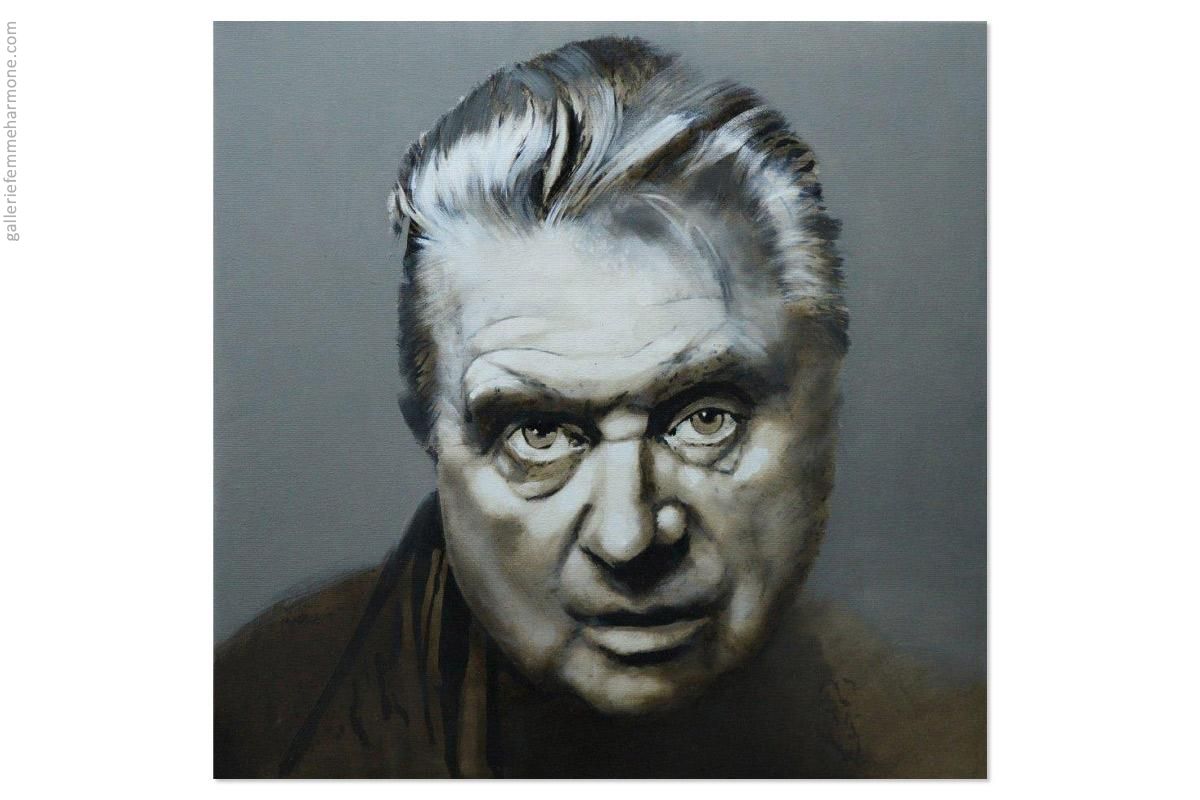
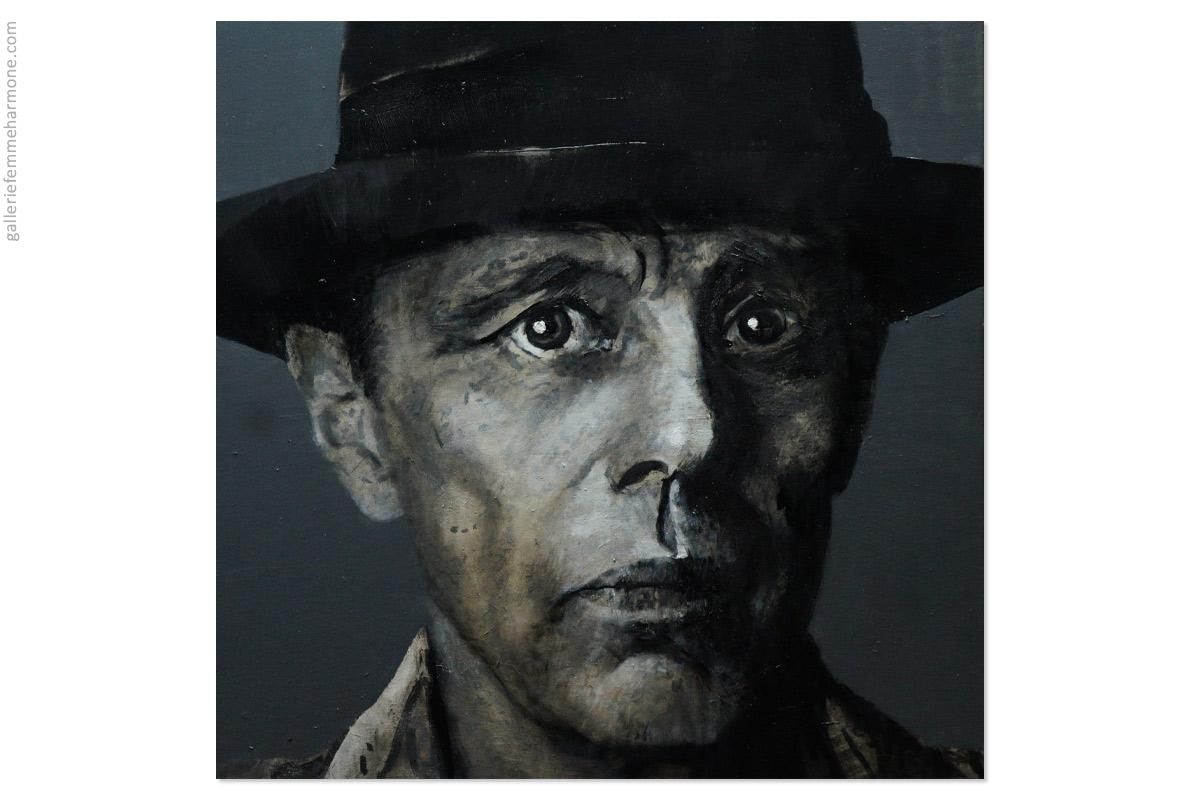
The third wall surprises: largely monochromatic, yet powerful in intensity. Six male portraits—Joseph Beuys, Salvador Dalí, Albert Einstein, Francis Bacon, Stephen Hawking, and Endre Ady. The selection itself signals openness. Through their faces, Ardey reveals dramatic intellectual and artistic depths. Her portraits of Einstein and Hawking represent a summit of her achievement: intense, economical, and profoundly concentrated works. Hawking’s portrait has drawn international attention.
The exhibition concludes with a genre scene inspired by America, rendered with irony and lighter chromatic richness—further proof of the artist’s broad painterly horizon.
The works in this chamber exhibition were selected from the past decade’s prolific production—mostly recent oil paintings on canvas of exceptionally high quality. They carry the professional foundations of the now-legendary Gyémánt school, enriched by the sovereign maturation of Ardey’s own evolving oeuvre.
“I Paint, Therefore I Am” is the title of the exhibition. Painting is life—and painting gives life.
Budapest, November 8, 2025
Balázs Feledy
Edited version of the opening speech delivered at the exhibition organized by the Contemporary Forum for Female Reflections at the Femme Harmone Gallery